Monday, 11 February 2013

MUSINGS FROM THE BOWER 29


‘By hook or by crook,
I’ll be first in this book’


When did you last sign your name?  Properly, with a pen, not electronically on an email or text. Think about it – years ago we signed our name regularly. We wrote letters, signed cheques or scrawled our signature on petitions to our local MPs. Today, even petitions tend to be online, and unless we’re entering into some official business, like taking out an insurance policy or making a major purchase, our signature isn’t required.  When did you last write your name in someone’s autograph book? I expect that is even longer ago – in Victorian times, and right up until the Second World War, most girls and young women had autograph books, not to collect the signatures of their favourite pop singers but to collect rhymes, quotations and drawings entered up by their relatives and friends.
After the War, people still had autograph books but the rhymes become more banal, and gradually the books fell from favour. Sometimes, school leavers copy the American idea of the school year book, collecting signatures and good luck messages from their classmates, but in general, today’s books are used by fans to gather the autographs of their favourite actors, film stars, pop stars or reality personalities. A couple of years ago I wrote a book about autograph collecting, and gathered a collection of early autograph albums, which were packed with exquisite watercolour paintings, sketches and delightful verses. Can you imagine someone today taking the time to borrow someone’s autograph album, returning it a few hours later embellished with an intricate painting? Or a cartoon? Or a long poem, lovingly written, full of advice for the years ahead? No, neither can I.


Some imaginative pages found in earlier autograph books involved photographs or small objects pasted in, such as silk pictures, cigarette cards, lengths of thread, locks of hair, buttons, postage stamps or matchsticks with a clever comment, witty remark or joke beneath. For instance ‘The Lost C(h)ord’, ‘I’ve stamped your page’ or ‘This is the most striking object in your book’, as well, of course, as that vital signature.
One of my favourite rhymes that I’ve come across, was written in the 1920s:
He criticised her pudding
He didn’t like her cake
He wished she’d make the biscuits
That his mother used to make
She didn’t wash the dishes
She didn’t make the stew
And she didn’t darn his linen
As his mother used to do
Oh well she wasn’t perfect
Though she always tried her best
Then one day at length she thought
It was time to have a rest
So when that day he scolded
The same complaints all through
She turned around and boxed his ears
Like his mother used to do.

Or how about this gem, also from the 1920s?
Some girls love their brothers
But I so good have grown
That I love somebody else’s
Better than my own.


Love, marriage and babies are recurrent themes, something to be expected considering the vast majority of autograph books were owned by young women or schoolgirls. Friendship is another popular topic, with people proclaiming undying devotion. Interestingly, unlike today where we tend to bottle our feelings or make jokey references about ‘eternal friendship’, a few decades ago people weren’t afraid to show their feelings. They were happy to write loving thoughts and messages to friends and relatives as well being willing to show their patriotism by writing stirring quotations about Britain, its soldiers or its Union Flag. Unsurprisingly perhaps, forget-me-nots are the flowers which crop up in albums the most, though roses and violets are also exceedingly popular.


When on a lonely path you’ve got
And may perchance to see
That little flower Forget-me-not
Pluck it and think of me
 
This one was found in a late Victorian autograph album, and crops up time and again over the decades:
Your album is a garden
That only friends may know
I will plant a forget-me-not
And see if it will grow


It’s interesting to analyse the themes – broadly speaking, they fall into four distinct categories. There are the flippant, humorous or novelty entries – these are verses and drawings which usually bear no relevance to the owner of the album; they are purely entries chosen to entertain. Secondly, there are the sentimental entries which often proclaim advice, friendship or love. The third type are those which consists of quotes, homilies, texts or poems. Sometimes these poems seem original to the writer, but more often are an extract from a well-known poet such as Browning, Kipling, Shakespeare or Keats. The fourth category belongs to the entries that I think of as ‘self-indulgent’. These are the self-satisfied, holier-than-thou entries that were particularly in vogue in Edwardian times and up to the 19220s. You can imagine these being penned by elderly aunts with pursed mouths like cats’ bottoms, or pompous uncles who believed that their flighty nieces needed a firm hand to keep them on the straight and narrow. They tended to consist of moralistic verses and prose setting out rules for behaviour, and you can imagine the young recipient screwing up her nose in disgust as she read the offering, such as this entry dated 1919:

 Don’t look for the flaws as you go through life
And even when you’ve found them
It is well and kind to be somewhat blind
And to look for the virtue behind them.
The world will never adjust itself
To suit your whines to the letter
Some things must go wrong your whole life long
And the sooner you know it the better
 
I rather like this 1950s’ offering, too:

Tell me quick
Before I faint
Is we friends
Or is we ain’t?


As children, we tended to scrawl our names and a sentiment such as the ubiquitous ‘By hook or by crook, I’ll be first in the book’ or maybe, ‘Don’t kiss at the garden gate, Love is blind but neighbours ain’t’. However, as we mature, we realise what a great responsibility we undertake on the rare occasions when an autograph book is proffered for us to sign. What should we put? Do we come up with a thoughtful entry in the hope it will guide the book’s owner through life’s rocky highway, or do we opt for something witty to demonstrate our sense of humour? Sadly, the opportunity rarely comes along nowadays.


A Philographist's Prayer

Can't think
Brain numb
Inspiration won't come,
Can't write,
Bad pen,
Much love,
Amen


Tuesday, 29 January 2013

MUSINGS FROM THE BOWER 28


This has been a waxwing winter. Waxwings are elegant birds, slightly smaller than starlings, with a pinkish-beige body, black mask and throat, yellow and white wing markings, yellow tail flash and a punk-like crest on top of their head. On their wings are a few bright red waxy feather shafts, which resemble old-fashioned sealing wax, hence the birds’ name. They are winter visitors to Britain, but in some years – such as this – they come in vast numbers because there aren’t enough berries and hips to feed upon in their native Scandinavia. When I heard there was an invasion of the birds, I was determined to see some for myself as I had heard how striking they were, but although I was told several times that they were nearby, the waxwings had always flown on by the time I arrived.

Waxwings seek out berries in parks and gardens, and, especially, around supermarkets, which often, luckily for birdwatchers, plant sturdy, evergreen berry-bearing bushes around the car parks. So yesterday, when I heard that eleven of the birds were near our local Sainsburys, I was determined to see them. We parked and while my husband went in for some bread, I kept watch, hoping I would see a few of the birds around. But no luck. So we decided to drive along the roads surrounding the store in the hope that they were still in the vicinity. Suddenly I noticed a small flock of birds in a tree. Could it be? Yes! Parking once more, we walked along to the tree. Nearby was a thorny rose bush and after a while some of the birds fluttered down to take some rose hips. Close-up, the birds were stunning and I felt so privileged to see them. They didn’t seem to mind being observed, and we stood at watched them for half-an-hour or so, until the bitter wind had frozen our fingers and faces. Even so, I managed to get quite a few photographs – a memento of a beautiful bird – as well as hearing their unusual song.


From one songster to another; a few months ago, regular readers of my blog might recall that my daughter and I went to a pop concert in Bournemouth that featured Mary Wilde and a couple of guests. We enjoyed it so much that we vowed to get to another when the opportunity arose, so imagine our delight when we found that Marty was to appear at the Rhodes Centre in Bishops Stortford, not too far from us, together with his band, The Wildcats. I booked three tickets, as my husband didn’t want to miss out on the fun, and on Saturday we took our seats in the comfortable small theatre. We weren’t disappointed. Marty was on top form – amazing to think that he is 74! – and the Wildcats were excellent too. We, together with the rest of the audience, sang and clapped along as all our favourite hit from the late 1950s and early 1960s were belted out.

There was a bonus, too. At the Rhodes Centre an exhibition was being held entitled ‘Worn To Be Wild’ which featured a selection of dresses by dress designer and textile artist Kate Plumtree, all inspired by a British bird or mammal and a specific fashion era. The intriguing dresses included designs based on a bat, a kingfisher, a mute swan, a Grebe, a fox, a golden eagle and an otter. I remember seeing some of them featured on Springwatch Unsprung last year – the inventiveness of the designs was extremely impressive.


In the last blog I mentioned that I was hoping to get a new bookcase to bring some order to the heaps of books which I kept tripping over. Luckily, in the end my daughter and I didn’t have to smuggle one in, which was good as I doubt it would have fitted into her car. This was because I explained to my husband how much space we would gain, how much tidier it would look and (the clincher), how he would be able to keep some of his books about trains to hand! So, a quick trip to Argos, a, surprisingly easy, battle with a flat pack – and the bookcase was up. It looks good, and, best of all, my precious natural history guides are all together. So now, I can read about waxwings whenever I want, as the book is now easy to find!


Saturday, 19 January 2013


MUSINGS FROM THE BOWER 27

The more it snows
(Tiddly Pom)
The more it goes
(Tiddly Pom)
The more it goes
(Tiddly Pom)
On snowing.
So sang Winnie-the-Pooh one snowy day. And I sang it too as I watched the snowflakes fluttering down from a heavy grey sky – they began lightly, more like white dust than flakes, lulling me into a false sense of security. Then they grew larger, and started swirling and swooping before settling, covering the grass, the shrubs and the flower pots with a snowy white blanket. The branches of the apple tree looked beautiful with their frosting, while the owl and rabbit garden ornaments were turned into mysterious heaps of snow, like mini-snowmen waiting to be decorated with lumps of coal eyes and carrot noses.
We are lucky in our little corner of Essex, as we haven’t –so far – experienced the really heavy falls that some areas are suffering, and most of the roads are passable. Even so, my daughter took the precaution of leaving work slightly early on Friday to avoid travelling home in the dark though the swirling snow. It was just as well, because not long after the road she travelled became gridlocked.
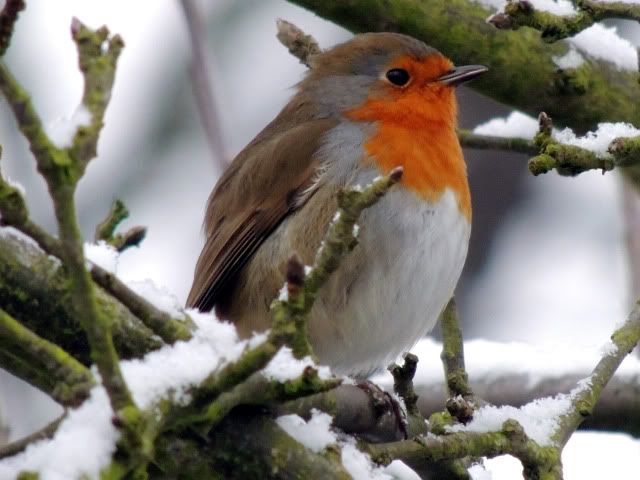
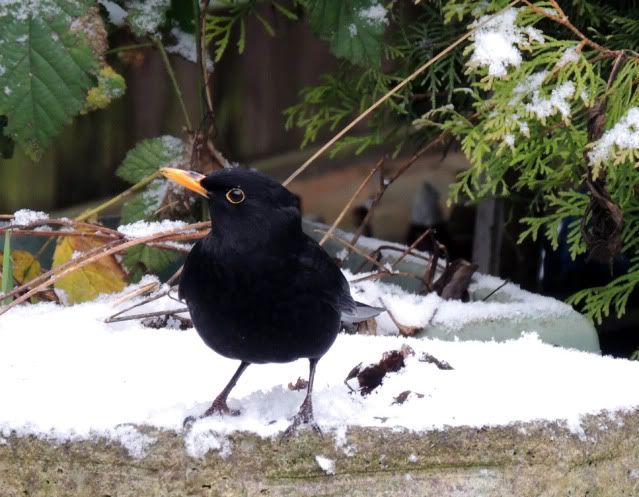
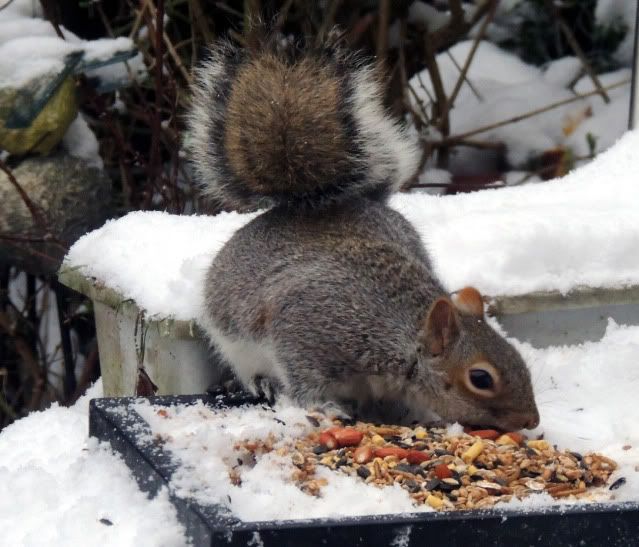
More than ever, this is the time when it really is important to feed the birds – the robins have been coming down the moment the food is put out in the morning, even though it’s still dark. The tits, sparrows, starlings, blackbirds and dunnocks follow soon after, before the heavy mob – woodpigeons and squirrels – muscle in to dominate the feeders. Nuts, fat, seed, kitchen scraps – though not too much white bread – and mealworms (fresh or dried) are all very much appreciated. If the nuts or the fat balls that you buy are enclosed in plastic mesh, please remove it and put the food into a purpose-made peanut feeder or fat ball feeder, because birds die a lingering death if their feet become entangled in the mesh and they can’t escape.
Water is vital, too. Not only is it important for them to drink, they need to bathe to keep their feathers in pristine condition, so water, whether in a large dish, a pond or a fountain, will be gratefully received. If the dish freezes over, pour some hot water onto the ice to thaw it, and if you put a ping pong ball or tennis ball in the water, it will help stop the dish or pond from freezing completely. I love watching the birds splashing about in the water, with the snow piled high all around – they remind me of those intrepid swimmers who brave our seas ‘for fun’ in the winter months.


I’ve been sorting through boxes and boxes of photographs this week. As a writer, I need photos to illustrate my articles, and so over the years built up a comprehensive library of photos covering many subjects. Nowadays, of course, the use of digital cameras means that photos can instantly be uploaded to the computer, without the need to laboriously scan them in. Photos on the computer can be tagged so that they are easy to retrieve just by typing the subject into the search engine. Not so with prints, and although most are filed under subjects, a large quantity escaped the net and have been lurking in boxes – I didn’t have a clue what was there. Gradually, I’m pleased to say, they are coming under control, and it’s been quite exciting to see photos that I had forgotten about. They have given me plenty of writing ideas, too.
In January I always feel as though I want to madly clean and tidy (luckily, those feelings soon go after a lie-down!) but one thing I really want to do is to get a new bookcase, because I can never find the book I’m looking for as they tend to get stacked in heaps. My husband doesn’t want me to get any more bookcases, but my daughter and I have had a secret measure-up, and have discovered that one would fit nicely in the space near the door. So, one day when he’s out, we will go and buy one and smuggle it in before he gets home. He might not even notice (she says, very hopefully) – he didn’t notice when we sneaked in a 6ft high CD shelf unit recently!
Oops – it’s snowing again!

Sunday, 13 January 2013


MUSINGS FROM THE BOWER 26

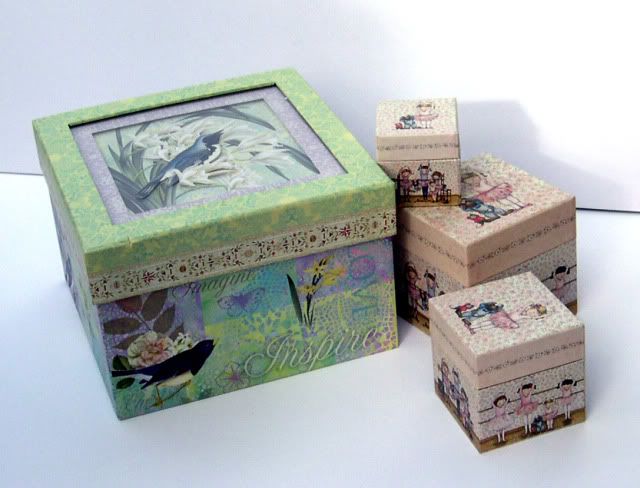
I’ve been having a ‘sorting and tidying session’. I freely admit to being a hoarder, but my excuse is that my ‘treasures’ give me something to write about, whether a doll, a piece of china, a postcard or the wrapping from a millennium celebration chocolate bar! Near my desk – which isn’t really my desk but actually the dining room table – I had accumulated a few crates of typescript, pencils (oh, I love pencils, especially when they have just been sharpened and have that fresh woody smell), folders, photographs and magazines. They didn’t look very tidy. Then I discovered a shop which sold boxes, pretty boxes decorated with birds, flowers, butterflies and all manner of things, and soon a selection came home with me. In the1960s there was song which went something like this:
‘Little boxes, little boxes,
Little boxes made of ticky-tacky,
Little boxes, little boxes,
Little boxes, all the same.
There's a green one and a pink one
And a blue one and a yellow one
And they're all made out of ticky-tacky
And they all look just the same.’


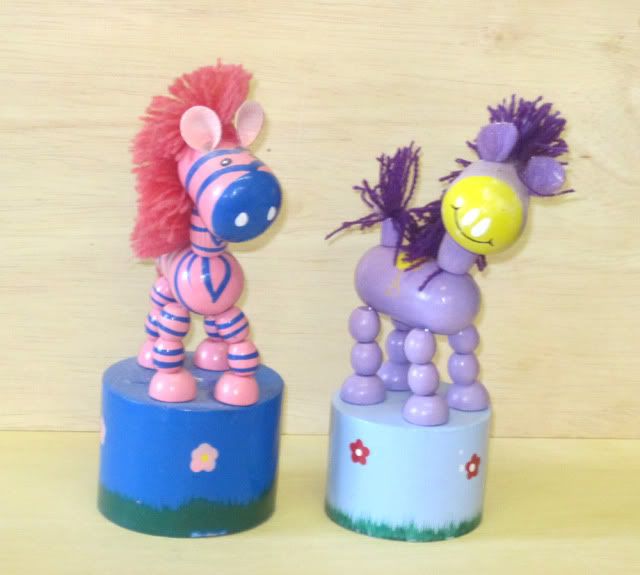
Well, my boxes aren’t made from ticky-tacky, whatever that may be. They are made from sturdy cardboard, and some have posh metal handles or little studs in the corners. And they are certainly not all the same – there are big ones for magazines and tiny ones to hold paperclips, and in-between sizes for pens, camera chargers, disks, notebooks and –um – my collection of wooden push-ups. (I’m addicted to wooden push-ups. They are toys intended for children, and are usually colourful animals on a base. When you push the underside of the base, the animal collapses in a heap. Great fun!) Anyway, so now the dining room looks much neater and much more colourful. The horrid plastic crates have gone and in their place is a collection of pretty boxes.


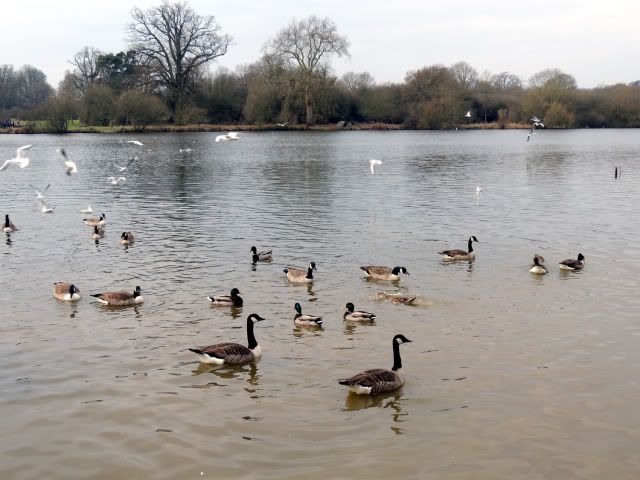
The weathermen are forecasting snow this week, and apparently it is already falling in some parts of Britain. As yet, we haven’t had any but it’s only a matter of time – certainly the temperature has dropped dramatically today. My daughter and I had an enjoyable walk in Hatfield Forest this morning, but we were certainly conscious of the cold and grateful that we had wrapped up warmly. On the lake we were pleased to count six grebes – normally we only see a couple. Furthermore, one pair was performing their mirroring dance. There was no weed waggling, but even so, it was certainly surprising to see them dancing so early. There was also a pair of Canada geese rhythmically pushing their necks forward in a kind of dance. If the snow and bitterly cold temperatures do arrive, I think that all feelings of courtship will be put aside till spring.


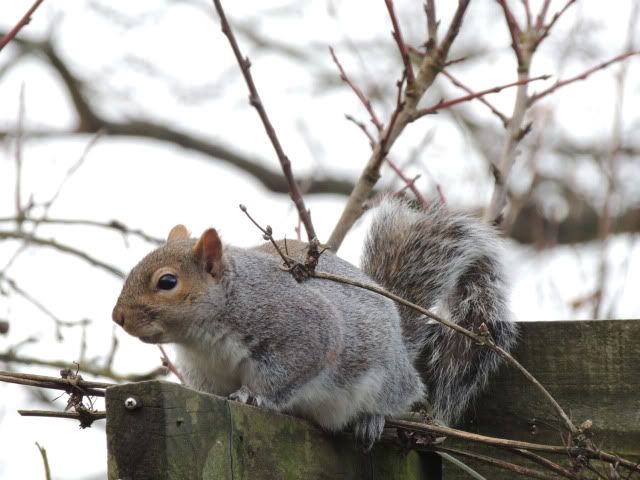
In the garden we now have two squirrels, one more shy than the other. I threaded some monkey nuts on a wire and hooked it onto the feeder and one of the squirrels was carefully removing the nuts one by one – I was impressed that he hadn’t tried to pull the whole wire down. Then suddenly, as he pulled off one of the nuts, it freed the next nut, and then the one above until a dozen or so monkey nuts, still in their shells, rained down upon the surprised squirrel, pinging off his head and bouncing to the ground. He had hit the jackpot and you could see the amazement on his face.

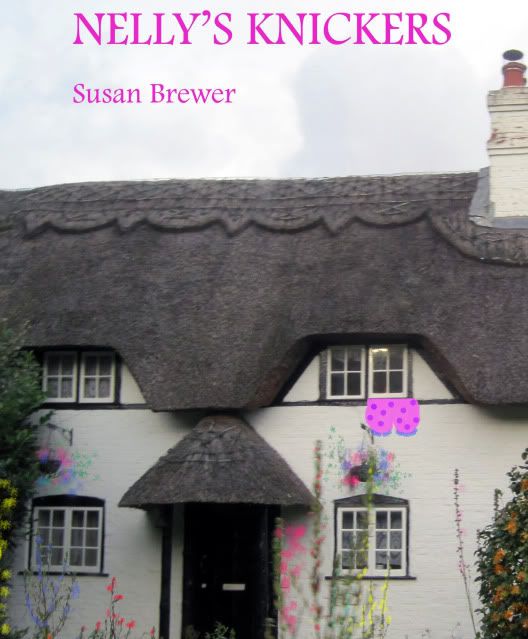
Finally, I am pleased to announce that for five days only there is a free promotion on my new novel, ‘Nelly’s Knickers’. Set in the late 1980s, this humorous novel follows the antics of a lively group of pensioners, furious after a spate of petty thieving leaves them bereft of their treasured concrete cats, pots of plants, plaster owls, bird baths and cheeky gnomes. Deciding to take matters into their own hands they not only defeat the enemy but the confrontation  becomes the talking point of the country – only to be topped by an outlandish performance from feisty Glad and her passion for Janet Reger underwear. 
Along the way we meet the irrepressible Eric taking flowery revenge on the Powers-On-High in the town hall after being forced to take voluntary redundancy, Dippy Doris with a penchant for speaking a dozen words when two would suffice, Rosa with a ‘face like a crumpled pile of wet washing and a mouth like a cat’s bottom’ and posh Hermione who struggles to run the Social Club against all odds. We mustn’t, of course, forget Maisie who tries to keep her best friend Glad from being too outrageous. And last but by no means least is 86 year-old Nelly whose knickers are essential to the whole altercation.

If you would like to download this novel for free to your kindle, ipad or computer, please go to http://tiny.cc/9ogaqw  - but remember you only have until Wednesday!

Saturday, 5 January 2013

MUSINGS FROM THE BOWER 25

Welcome to a new year of musings – 2013. Some people consider the number 13 unlucky, but I’ve not had a problem with it.


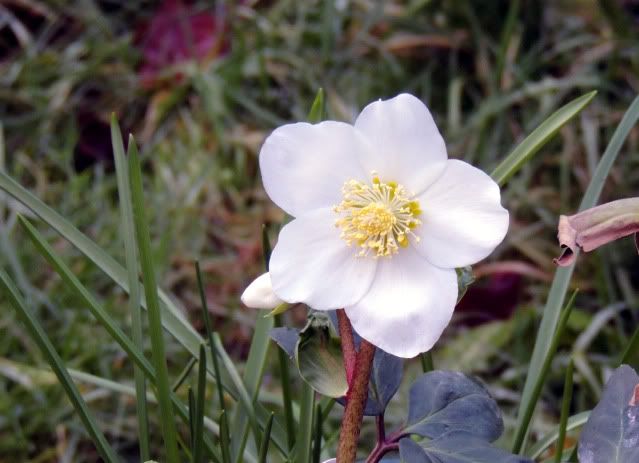
It’s much too cold to sit in the bower at the moment, but already the evenings are getting a little lighter, and it’s only a few months to spring. There is a pretty Christmas hellebore in bloom, I love those white waxy flowers. And I bought a pot of lily-of-the-valley at the local garden centre a few days ago. It was in bud, and the flowers have opened in the warmth of the kitchen, perfuming the room. Glorious! Lily-of-the-valley is ‘my’ flower – it’s the flower of May, my birthday month.

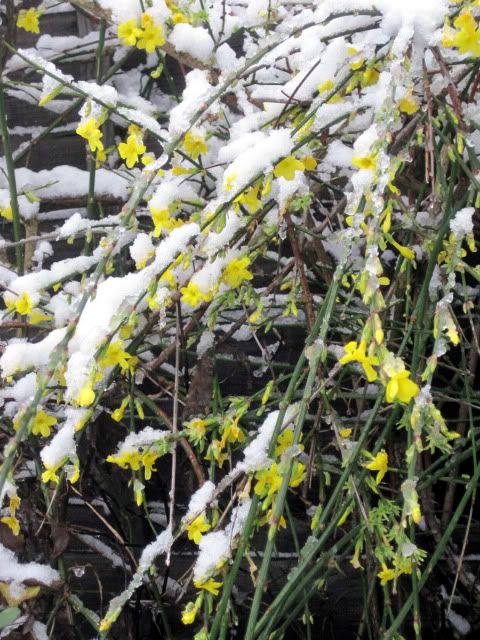
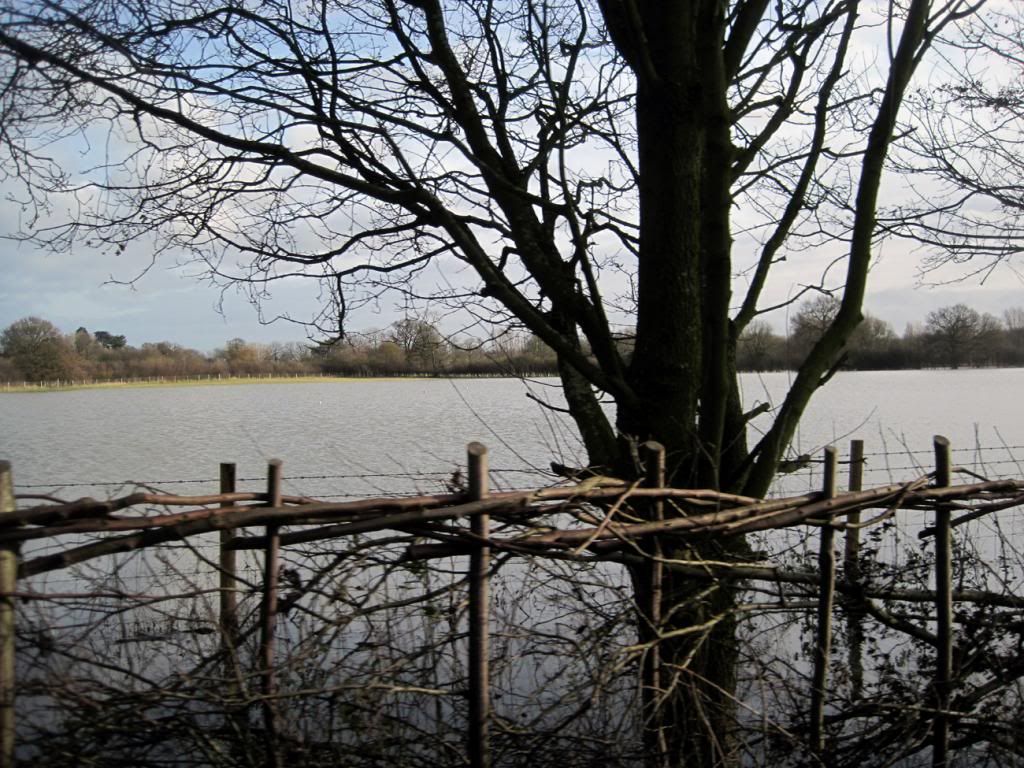
The winter jasmine has been out for weeks, its cheerful yellow flowers on their curving green stems brighten the garden at this time of year. I took a photo in early December, just after we had a light snowfall. Amazingly, we have a red polyanthus in flower which we bought a couple of years ago. I don’t think it’s stopped blooming. The snowdrops are shooting, and a trough of daffodils have leaves about three inches high. Let’s hope we have a warm and sunny spring so that we can see the flowers at their best. Unfortunately we have had so much rain that the garden is very muddy – the lawn is really soggy, but at least we didn’t get flooding unlike so many people. It must be devastating to have torrents of water ruin your furnishings and possessions. As I’ve travelled around recently I’ve seen plenty of flooded fields, swollen rivers and water-logged roads.


Usually, this is a green field, not a lake!


Have you made any New Year resolutions? My only one, so far, is to keep a nature diary so that I can see just when the blue tits begin nesting in the boxes and the newts come back to pond.  I think it’s the wrong time of year to begin dieting – this cold weather requires hot soups and stews, filling casseroles and maybe warm puddings with plenty of custard. This is when my slow cooker comes into its own – just put all the ingredients into the pot about 10 am, and by 6pm a delicious stew with tender meat and rich gravy is ready. The slow cooking means that you can get away with cheaper cuts of meat, and root vegetables cook beautifully too.  When the warm weather comes, that’s when I’ll be serving plenty of salad and healthy food!


Recently I wrote an article for Best of British magazine about the history of pet keeping. It is interesting to see how fads and fashions changed through the years, from parrots and monkeys, to tropical fish and budgerigars, to today’s fad for exotic pets and reptiles. Dogs and cats are still the most popular pets in Britain, but rabbits are poised to take over – house rabbits are becoming a craze nowadays, and it’s quite easy to see why. Rabbits can easily be house-trained – they are naturally clean creatures anyway – and they can be affectionate and playful, too. They are also quiet, although our rabbit does grunt when he is happy!
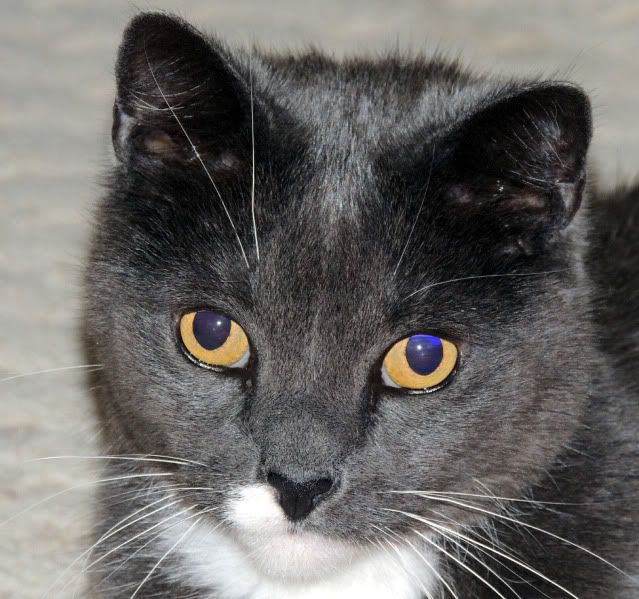
I would love to have a cat, but sadly, with a main road at the back of us, a very small garden and an open-plan house, it is not feasible. So I get my ‘cat kicks’ when I visit my son, who has two, one grey, one ginger.  When  I was a toddler, I had a blue Persian cat called ‘Dinky’, a terrible misnomer as the name conjures up thoughts of tiny cat. My mother said she used to feel really silly when calling ‘Dinky, Dinky,’ and this huge fluffy cat came plodding up to her!  Later, I had a ginger cat called Jinx – I didn’t mean to buy a cat, I was meant to be buying a tortoise (but that’s another story) – and Jinx was beautiful, especially when sitting in the sun. The rich gold of his fur was almost the colour of marigolds.

Speaking of marigolds, did you know that an old name for marsh marigolds was marybuds? We used to sign a hymn at school, and the second and third verses were my favourite – they told of everything that was beautiful about spring:

Green now is on the larches;
Springtime in triumph marches,
And every day uncloses
A host of new primroses:
Then daffodils and marybuds let us in garlands bring,
For Christ has come again to greet the spring.

Skylarks, the earth forsaking,
Soar to their music-making,
And in the roof-tree's hollow
Now builds the trusting swallow:
So cries to him, so flies to him my soul on fearless wing,
For Christ has come again to greet the spring.


Don’t those words make you long for spring to come?!


Monday, 24 December 2012

MUSINGS FROM THE BOWER 24

‘So this is Christmas
And what have you done
Another year over
And a new one just begun
And so this is Christmas
I hope you have fun
The near and the dear one
The old and the young’


I love Christmas. When I think back to all the Christmases I’ve known, there is quite a contrast between my childhood ones and those of today. For a start, we are so much more materialistic that we were sixty or so years ago.  People of my generation often say, ‘When I was a child, a tangerine wrapped in foil, a book and a handful of sweets were my Christmas gifts. And I was lucky to get those.’ It’s true there was little money about after the war, but maybe I was specially lucky, as I usually had a doll together with a tea set, doll’s cot or highchair, as well as assorted novelties, though I never had the heap of presents children get today.

I recall coming downstairs one Christmas morning – I must have been about eight – and had already unpacked the pillowcase of books, puzzles and a doll that had mysteriously appeared in my bedroom overnight. There, in the living room was a desk and chair, something I had wanted for so long. The desk was made from plywood with blue metal legs, and even had an inkwell. The chair was wood with blue metal legs. When I lifted the desk lid, there inside was a Bible, a gift from a favourite aunt. I recall being amazed that I had a desk as well as my pillowcase gifts and spent most of the day sitting at the desk and alternating reading the Bible with reading my new Beano annual!

Decorations were not as prolific in the shops as they are today, but we still made our rooms look festive, especially with paper chains which seem to be out of fashion nowadays.  Sometimes we would buy narrow strips of gummed paper which were threaded through each other to make a chain – they needed to be licked to form the links – but often we would buy packets of crepe paper which we would cut into 3” wide strips. We would take strips of two different colours, such as red and green, and machine them together straight down the middle. Then we would make small cuts along the edges to form a frill. One end of the strip was drawing-pinned to the ceiling and then twisted before being pinned to the opposite corner of the ceiling. Often, the colourful crepe paper strips were then enhanced with Lametta (long narrow strips of metallic silver paper) which was thrown over them to hang down like icicles.


Other decorations included honeycomb-paper balls and bells which folded flat when not in use, and tinsel which was invariably silver and much thinner than today’s tinsel. It was also prone to tarnish. Artificial trees were used by some people, but most of us bought a real Christmas tree from the greengrocer and dressed it with glass baubles, bells made from foil milk bottle tops and large electric ‘fairy’ lights – much bigger than today’s strings of tiny bulbs. The tree was topped with a plastic fairy doll, usually bought from Woolworths. Finally, we placed the crib in position. I still have the crib that I was given when I was about eight or nine – it’s a small, plastic affair with flat figures and is very special to me.


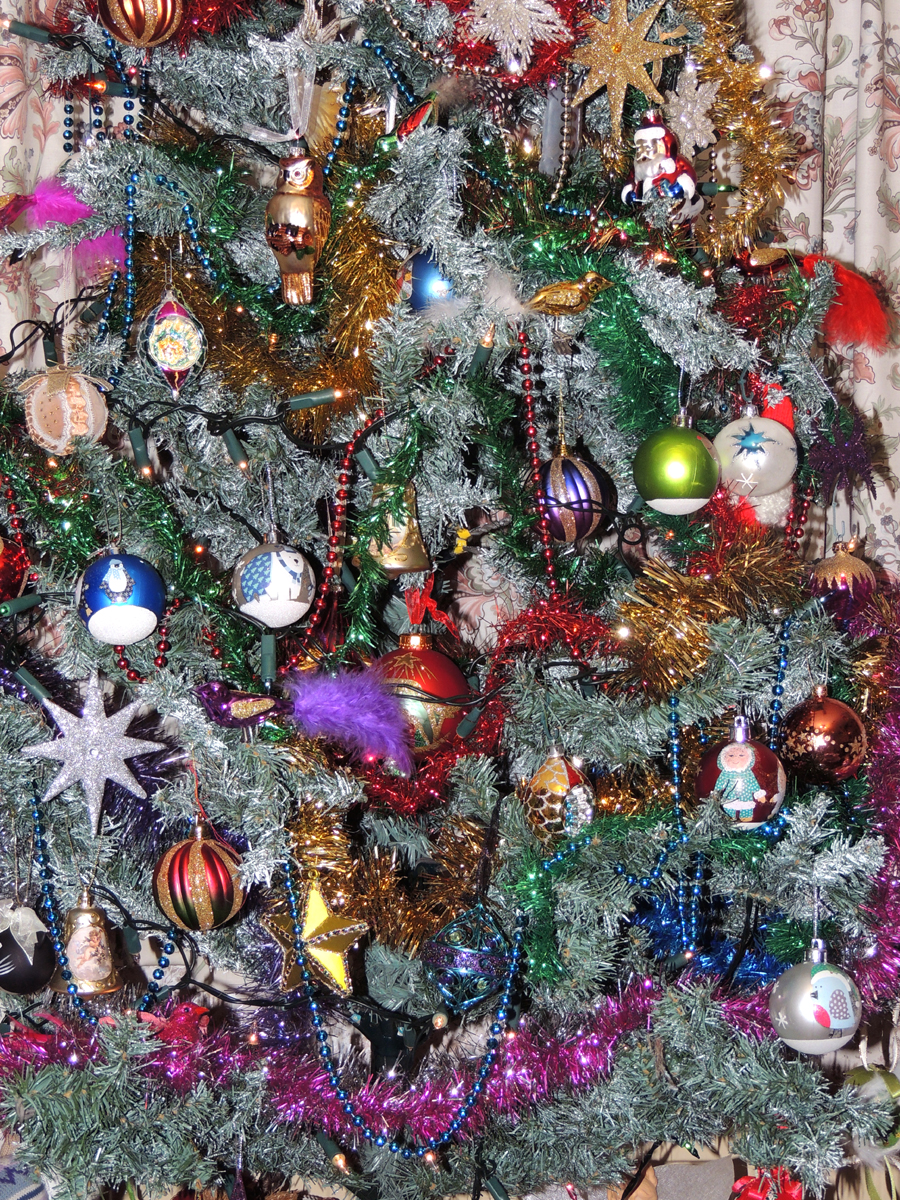
Nowadays, I collect both fairy dolls and Christmas cribs. Each year I choose a different fairy to go on top of the tree – this year there is a 1930s’ cloth and papier-mâché doll gracing the main tree, and a 1950s’ Rosebud fairy on top of the small tree in the dining room. Both trees are positively groaning with baubles and other decorations, and each year I buy a few more to add to the collection. Now, the cake is made and iced, the mince pies are baked, and the turkey and vegetables are awaiting their starring role.  It is almost Christmas eve – just another half hour to go, as I write this. I have a special tradition on Christmas Eve. I go out into the garden late at night and look up at the sky, remembering the Christmases past and thinking about loved ones no longer with us. Then I listen. For a moment I am a child again, looking amongst the stars for Father Christmas and listening out for sleigh bells. And do you know, sometimes I am positive that I hear them!

Happy Christmas to those of you who so kindly read my blog.


Wednesday, 12 December 2012

MUSINGS FROM THE BOWER 23


Do parents still sing lullabies to their babies? I read recently that a survey of young mums showed that most of them sang the latest chart-topper to get their little ones to sleep. This is fine in some ways, for instance if the song happens to have a melody and a gentle rhythm, though perhaps not so good if it’s a rap or something which requires a lot of shouting. Although tradition doesn’t seem to count for much these days, it would be sad if the old lullabies just died out, because they are a link with our mothers, grandmothers, great grandmothers and even further back in time.

The lullaby which most people probably know is Rock-a-bye Baby on the Tree Top (originally, it was ‘Hush-a-by). It first appeared in print in 1765, so was no doubt known well before then.


Rock-a-bye baby, on the tree top
When the wind blows, the cradle will rock
When the bough breaks, the cradle will fall
And down will come baby, cradle and all

In 1916, in The Real Mother Goose Nursery Rhyme book, a version is included which reads:

Rock-a-bye, baby, thy cradle is green;
Father's a nobleman, mother's a queen;
And Betty's a lady, and wears a gold ring;
And Johnny's a drummer, and drums for the king


The tune of Rock-a-bye baby is based on a very old marching song known as Lillibulero.


My mother’s favourite lullaby, the one she used to sing when I was a child was:

Oh lulla lulla lulla lulla bye-bye
Do you want the moon to play with?
Or the stars to run away with?
They'll come if you don't cry
Oh lulla lulla lulla lulla bye-bye
Into mummy’s arms come creeping
And soon you’ll be a-sleeping
Lulla, lulla lulla lulla bye

She also used to sing Brahms Lullaby, though I believe her version might be slightly different to the more usual one:
Roses whisper goodnight
In the silvery light
They hide from the dew
The whole night through
They will bear you above
To a dreamland of love
They will bear you above
To a dreamland of love

And of course, Golden Slumbers was another favourite:

Golden slumbers
Kiss your eyes
Smiles await you
When you rise
Sleep pretty baby
Do not cry
And I will sing
A lullaby


I used to sing these to my children when they were tiny, until one evening my son said tearfully, ‘Don’t sing that sad song, mummy’ – referring to ‘Oh Lulla Lulla Lulla Lulla Bye-bye’. Did he perhaps pick up the wistfulness in my voice, the fact that I was no longer a child and so my mother could no longer sing that special tune to me? Nowadays, with my mother long gone, I find that particular song even more poignant


I’m interested in the traditional methods of baby care, and I’m especially taken by some of the earlier baby garments. I have a collection of Victorian and Edwardian baby gowns, and the exquisite hand-sewing is often breath-taking. The gowns frequently feature dozens of narrow pin tucks, or borders of feather stitches. Sometimes there are delicate lace inserts or embroidered panels. Many of the Victorian gowns are really small, almost doll-sized – babies were smaller in those days. These gowns tended to have a scoop neck and fairly short sleeves, as opposed to the Edwardian gowns which had wrist-length or elbow-length sleeves and round necks. The Edwardian gowns were shorter than the Victorian ones, too. Sometimes I get a magnifying glass to examine the stitching,  wondering how on earth those women, often working in poor light, managed to achieve such tiny, straight stitches. Next time you’re browsing a secondhand shop or collectors’ market, take a look at these beautiful creations and marvel.